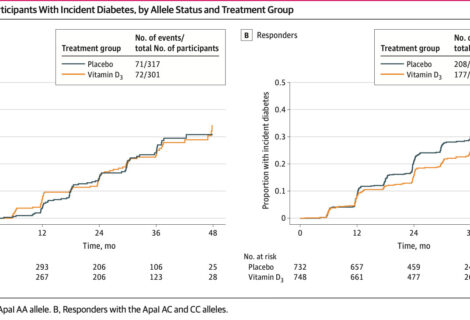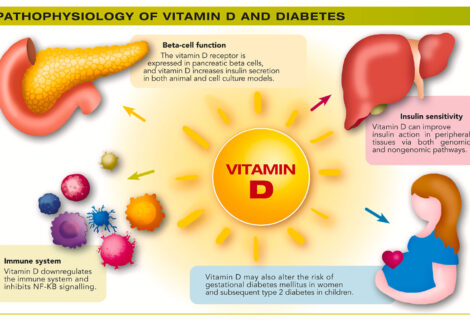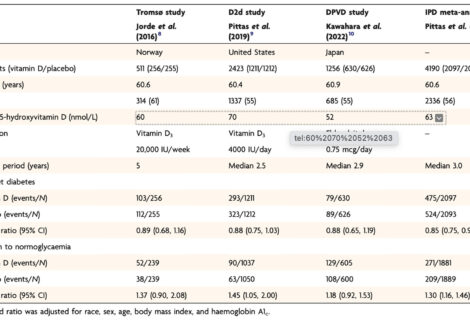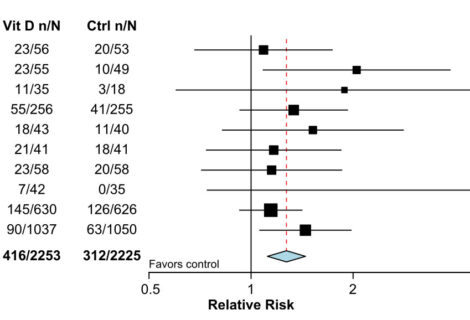
Not everyone responds to vitamin D in the same way, and genetics may explain why. In this study, we examined whether common variations in the vitamin D receptor (VDR) influence how individuals respond to treatment with high-dose vitamin D. Using data from the D2d study, we focused on three genetic variants and asked a simple but important question: can genetics identify who benefits from vitamin D and who does not?
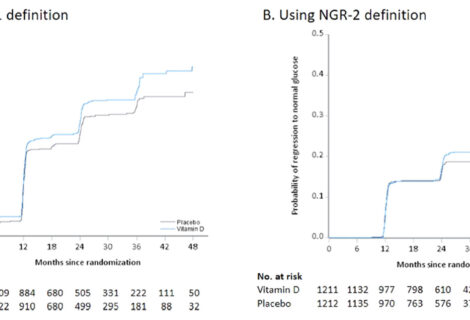
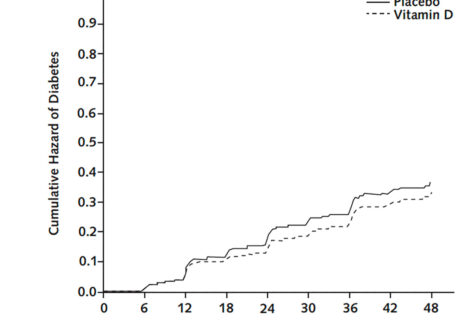
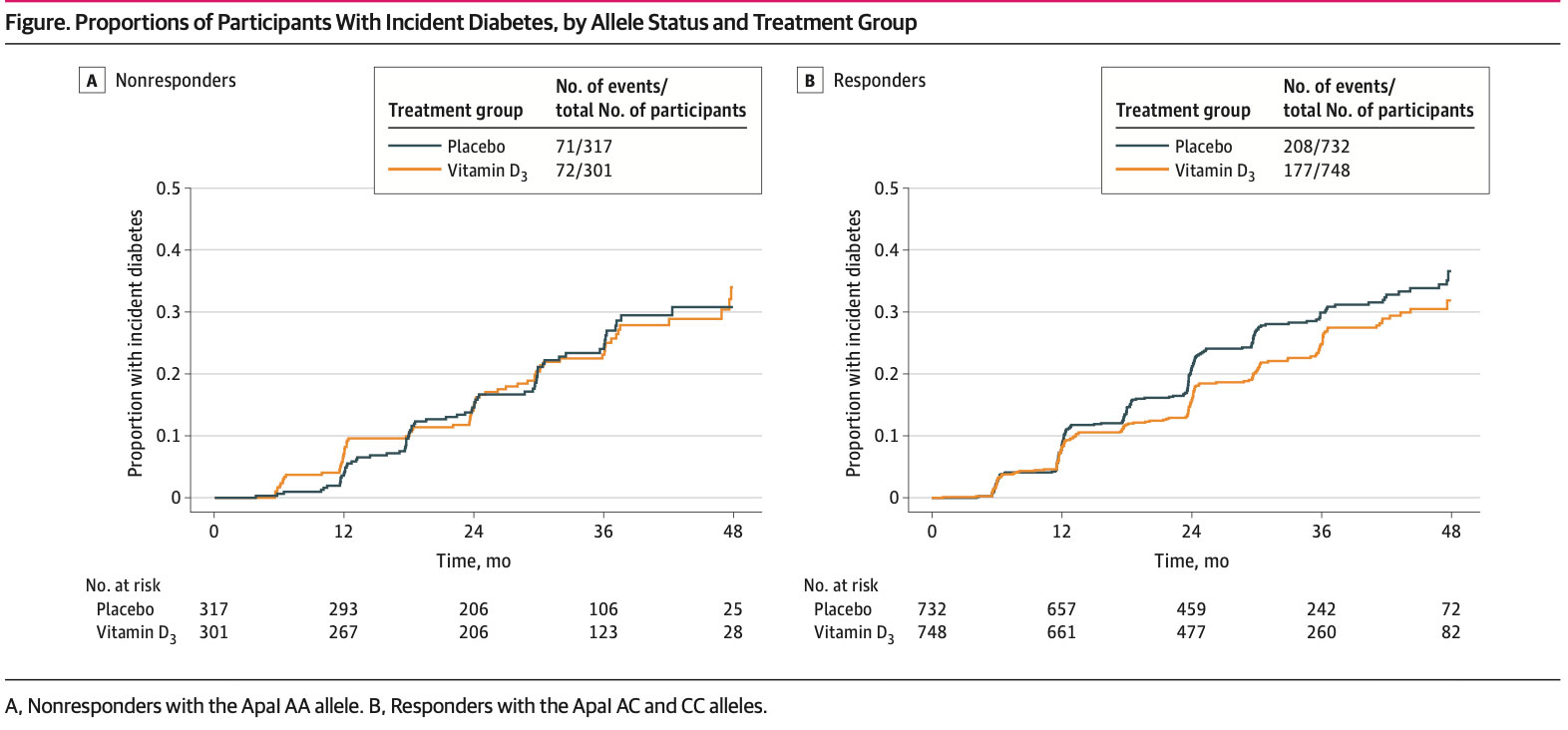
The answer was striking. Individuals carrying the AC or CC variants of the ApaI polymorphism (about 70% of participant) experienced a meaningful reduction in diabetes risk with vitamin D supplementation. In contrast, those with the AA variant (nearly 30%) derived no benefit. This pattern was consistent whether examining achieved vitamin D levels or treatment assignment, indicating a true biological difference in response rather than chance variation.
These findings move the field toward precision prevention. A single, widely available genetic test may be enough to identify who is likely to benefit from vitamin D supplementation. If confirmed, this approach would allow clinicians to target treatment more effectively, maximizing benefit, avoiding unnecessary therapy, and bringing a personalized strategy to diabetes prevention.